


Sparring is DEAD!
You might have heard this phrase thrown around on social media and on YouTube. After UFC Fighter Max Holloway stated in a press interview that he doesn’t spar anymore, the idea of not needing to spar has become somewhat of a fad in gyms around the world. Most recently, Martial Arts Youtuber Jesse Enkamp made a video exploring this idea and taking a surface look at the science behind why sparring does more harm than good for professional fighters.
Sadly, this sentiment is also used a lot by people who are half-heartedly deciding on becoming professional fighters. It is a mindset that isn’t exclusive to martial arts either. Any profession that features an element that is particularly hard, long, or boring sees these kind of questions pop up online: ‘Can I be a writer without reading?’ is one that I find particularly funny and stupid (given my background as a professional writer).
So, Can You Be a Fighter Without Sparring?

Technically, yes you can. But, why would you want to? Sparring is an essential part of training for many because it is the closest replicator of a real fight than you can safely have. Sparring simulates the techniques, atmosphere, and pressure you will be under during a real fight. If you don’t enjoy it, and don’t want to do it in the training room, why would you want to step into a cage, or a ring and do it for real?
The people who tend to ask this question are beginners to training. And it is okay to ask these kind of questions. A lot of experienced fighters forget how it felt to just be starting out, how alien everything felt, and forget that they weren’t always as disciplined and dedicated as they are now. For a rookie, the road ahead is incredibly long, and discipline hasn’t fully been hammered into them, so these ‘shortcut’ seeking questions are common.
For beginners, sparring is ESSENTIAL! There isn’t really a way around it, so if sparring scares you that much, you either have to grit your teeth and get through it, or re-evaluate whether you actually want to be a fighter. For beginners, sparring is pressure testing. It is an opportunity to take the techniques and combinations you’ve learned on pads or on a heavy bag, and learn how to apply them in an actual fight, because the two scenarios are very different.
As well as pressure testing, sparring teaches you something that no other form of training can properly install… timing. Timing is king when it comes to higher level fighting. It’s all well and good knowing the techniques, but if you don’t know when to throw them they’re effectively useless.
Sparring Is Safe, When Done Correctly
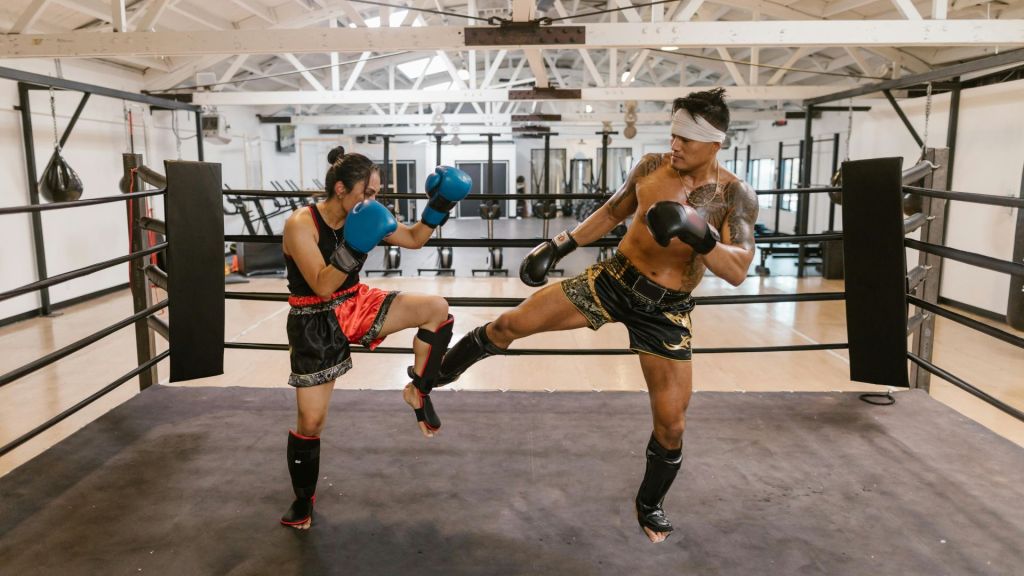
If sparring is so essential, why aren’t professional fighters sparring anymore?
Partly, it’s because they’ve spent years doing it, and have built up instinctive reactions and timing, to the point where hard sparring offers a counter-productive risk-to-reward ratio. But, a lot of people are misunderstanding the idea of not sparring. It doesn’t mean these fighters never spar, and never practice under pressure, it means they are now doing it safely, and in a smarter environment.
We’ve all seen clips online of hard sparring sessions where two training partners go to war. As cool as it looks, it’s incredibly stupid, and has the potential to do career-ending damage. This is what high-level fighters mean when they say they don’t spar anymore.
Good sparring is an opportunity to learn, and this can only be done successfully when there is a safe environment for each partner to take risks, so they can make mistakes and learn from them. When your partner is going 100%, your fight-or-flight response kicks in, and the increased cortisol levels – which controls your stress – impairs your ability to learn, instead being more focused on escaping, or winning the ‘fight’ you’re in.
That is why many gyms now implement a soft/’touch’ sparring only policy. To those with the old-school mentality, where this waters down fighting, this idea feels counter-productive and ‘soft.’ But this is being proven to be the best way to spar. Many gyms in Thailand will ban members from training there if they refuse to spar lightly, and try and hurt their partners. Western gyms are starting to understand this concept, and it is why professional fighters are no longer hard sparring. Soft sparring offers many of the benefits of hard sparring, whilst keeping both partners safe, and providing a more comfortable environment to implement new techniques, combos, and ideas.






You must be logged in to post a comment.