
They say that a true martial artist doesn’t need to rely on strength, however, in the modern world of high-level competitions, a solid foundation of strength and conditioning is essential. There are hundreds of different exercises and regimes available to competitors to improve their S&C, however, there are 7 key exercises that every martial artist should be utilising to get the most from their training sessions. Beyond mere muscle building, these exercises amplify your power, agility, and endurance, providing you with a competitive edge.
Zercher Squats

Zercher squats are pivotal for strengthening the lower body and stabilizing the core. These attributes are essential for executing explosive manoeuvres such as powerful strikes and takedowns, making Zercher squats indispensable for martial artists.
How to Perform Zercher Squats:
- Position a barbell in a squat rack at hip level.
- Stand facing the barbell and cross your arms beneath it to secure a grip.
- Step back with your feet shoulder-width apart and perform the squat.
- Descend until your thighs are at least parallel to the ground.
- Push through your heels to drive your legs to the starting position.
Medicine Ball Slams

Medicine ball slams are a cornerstone of explosive power development, enhancing strength across the body. This strength is crucial for delivering impactful strikes and dominating clinch and grappling scenarios—central elements of martial arts combat. Medicine ball slams can be performed across various planes (i.e. downwards, sideways, forwards, e.t.c.) depending on the needs of your martial arts discipline.
How to Perform Medicine Ball Slams:
- Hold a medicine ball with both hands in a shoulder-width stance.
- Raise the medicine ball overhead, fully extending your arms.
- With controlled force, slam the ball down by bending at your hips and knees.
- Swiftly retrieve the ball and repeat the action for the designated repetitions.
Kettlebell Snatches
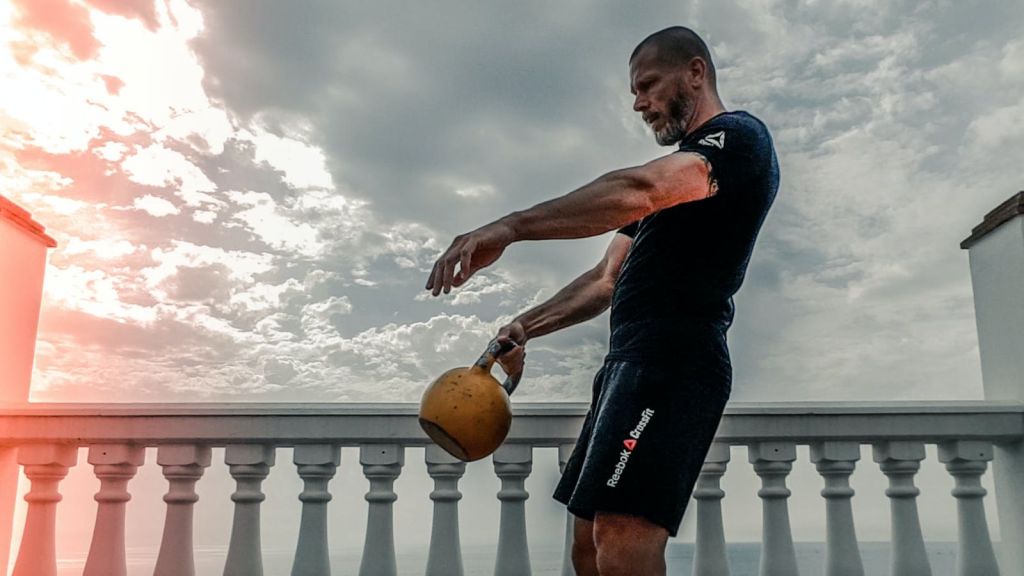
Kettlebell snatches amalgamate full-body strength, coordination, and explosive power—essential attributes for swift, impactful movements inherent in every martial arts discipline.
How to Perform Kettlebell Snatches:
- Start with a kettlebell between your feet and hinge at your hips to grip the handle.
- As you rise, propel the kettlebell upward by driving your hips and knees.
- Rotate your hand as you lift the kettlebell overhead, locking your arm.
- Lower the kettlebell with control and alternate sides before switching hands.
Floor Press
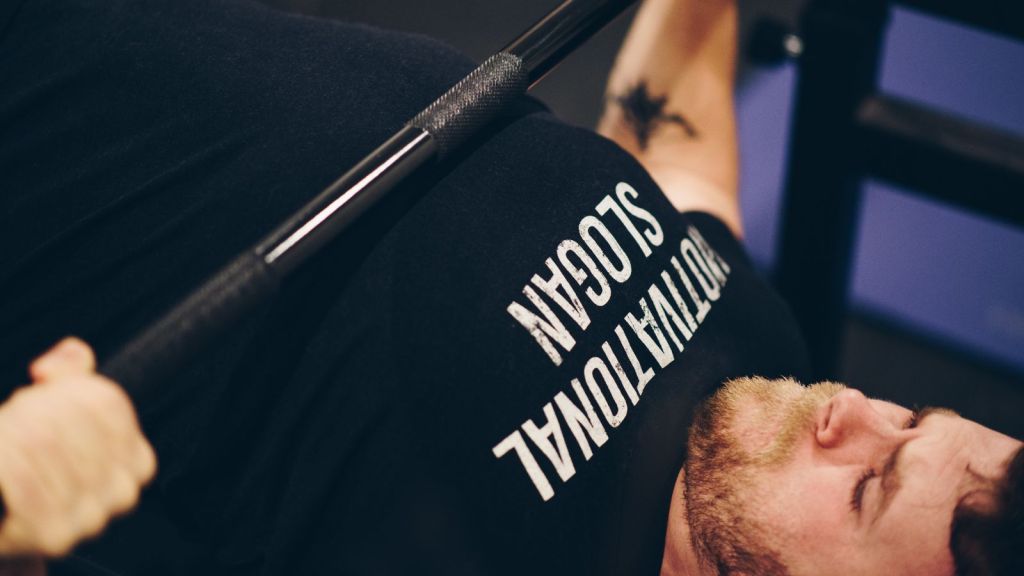
The floor press hones upper body strength, especially in the chest, shoulders, and triceps—muscle groups critical for powerful and effective strikes, a hallmark of accomplished martial artists. Boxers utilise the floor press for shoulder ability, and this exercise improves your bottom game in grappling arts like BJJ.
How to Perform Floor Press:
- Lie on your back with a barbell positioned above your chest.
- Grasp the barbell slightly beyond shoulder width.
- Lift the barbell from the rack, and lower it to your chest with elbows tucked.
- Push to return the barbell, prioritizing control.
Sled Drags
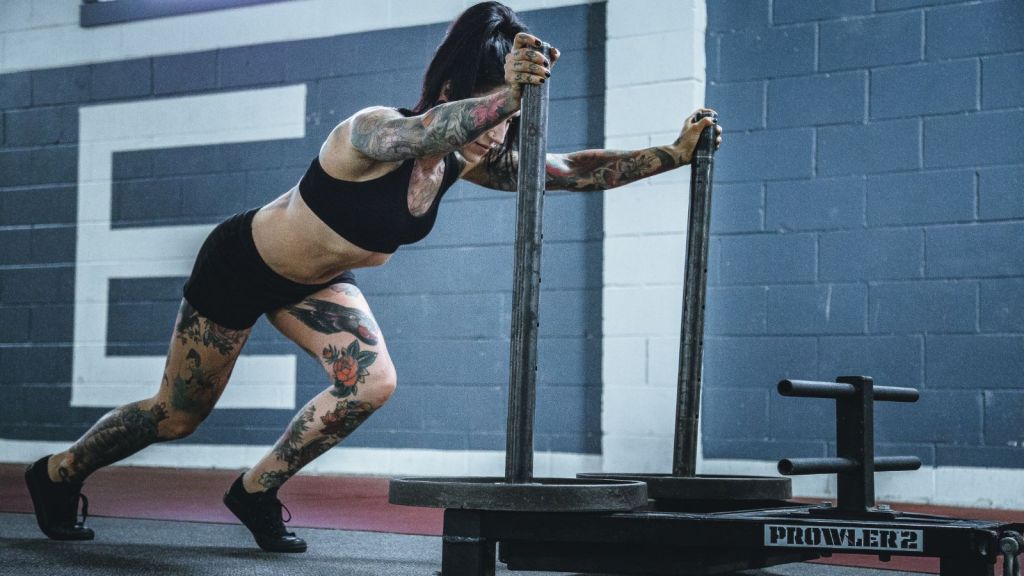
Sled drags refine rotational power and strengthen core stability—essential attributes for damaging punches, kicks, and ground control emblematic of every discipline of martial arts.
How to Perform Sled Drags:
- Attach a sled to a harness and secure it around your waist.
- Stand sideways to the sled with feet shoulder-width apart.
- Hold the sled handle with both hands and pull diagonally across your body.
- Engage your core, initiate torso rotation, and draw the sled downward.
- Return the sled to its initial position, completing the designated reps on each side.
Hip Thrusts
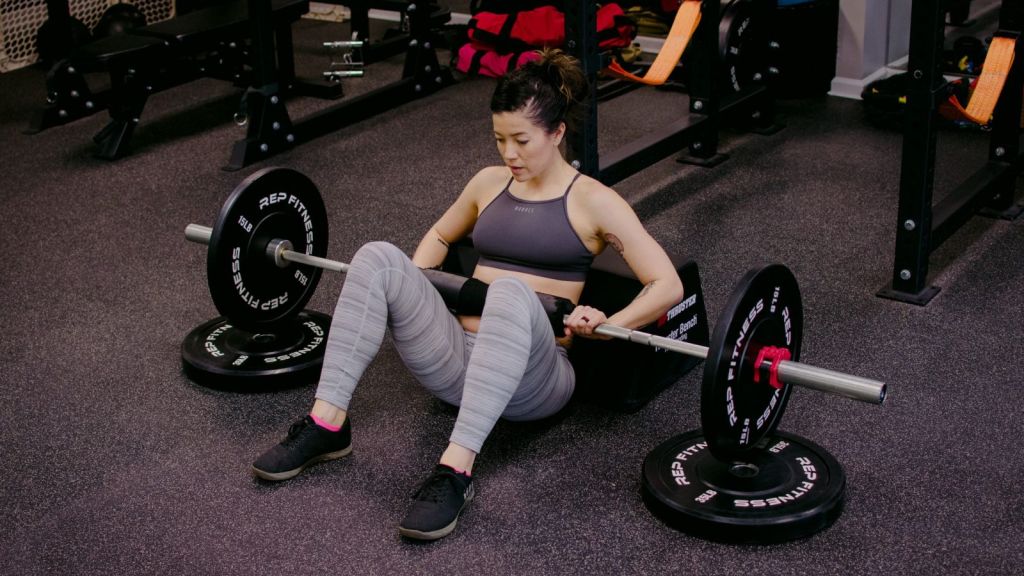
Hip thrusts emphasize gluteal activation and bolster lower body strength—foundational for generating power in actions like takedowns and explosive strikes—essential aspects of martial arts. They also perfectly encapsulate the essential movement of bridging in grappling sports.
How to Perform Hip Thrusts:
- Sit on the ground against a bench, placing a barbell atop your hips.
- Set your feet flat, shoulder-width apart, barbell aligned above your hips.
- Brace your core, drive through your heels, and lift your hips.
- Elevate your hips until your body forms a straight line from shoulders to knees.
Knee Jumps
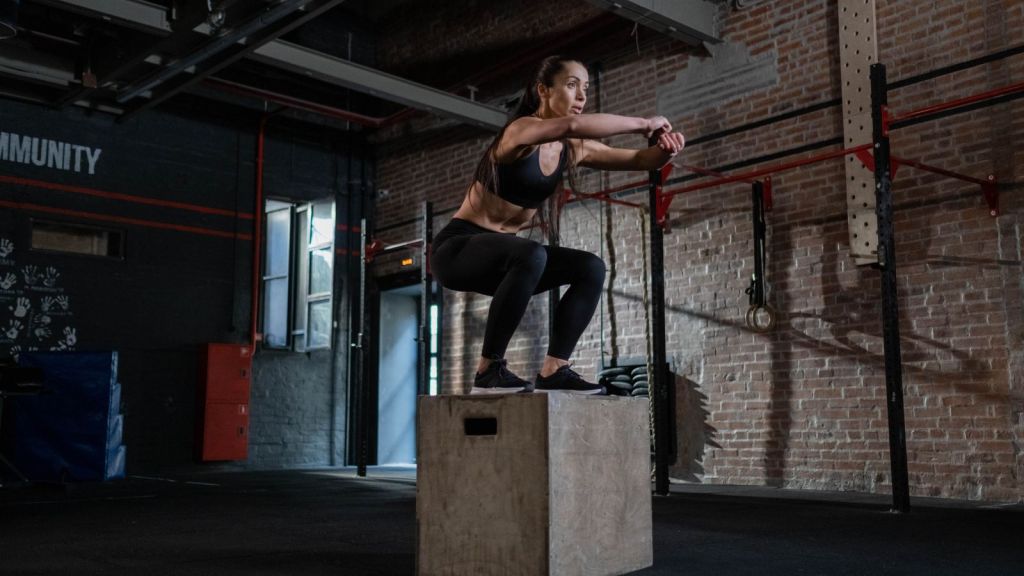
Knee jumps exemplify dynamic lower body strength and explosive power—core attributes of martial arts agility and swiftness, crucial for evasive actions and counterattacks. This exercise can also be made more challenging by following the knee jump with another plyometric move like a box jump.
How to Perform Knee Jumps:
- Begin kneeling on a flat surface, shoulder width apart.
- Squat slightly downwards, then launch yourself up.
- Propel off the ground forcefully, bringing your knees off the floor.
- Land on your feet.
- Gently bring yourself back to the kneeling position.
These seven exercises serve as a compass for elevating your strength and conditioning in martial arts. From lower body strength to core stability and explosive kinetics, these exercises encapsulate a holistic approach. By incorporating these exercises into your training regimen, you are poised to cultivate the physical attributes that will solidify your status as a dominant martial arts competitor. Strengthen your body, enhance your technique, and unleash your competitive edge in the arena.





You must be logged in to post a comment.